
Why Kichijoji Is Tokyo’s Most Liveable Neighborhood
Every few years, Tokyo residents vote Kichijoji the city’s most desirable place to live. It has happened so consistently that the result feels less like a survey and more like a standing fact. I’ve spent time in most of Tokyo’s major neighborhoods, and I keep coming back to the same conclusion: the rankings are right.
What makes Kichijoji work is density of the right kind. Within a 15-minute walk from the station, you get a national park, a craft beer scene, one of Tokyo’s best covered shopping arcades, vintage clothing shops, jazz bars, and a lake where you can rent a rowboat on a Tuesday afternoon. That combination, at that scale, in one neighborhood, is rare anywhere in the world.
The Geography Works in Your Favor
Kichijoji sits on the Chuo and Sobu lines in Musashino City, just west of the Tokyo metropolitan core. Shinjuku is 15 minutes away by express train. That matters because it places you close enough to the center for work and nightlife, while far enough to escape the noise and density of central wards like Shinjuku or Shibuya.
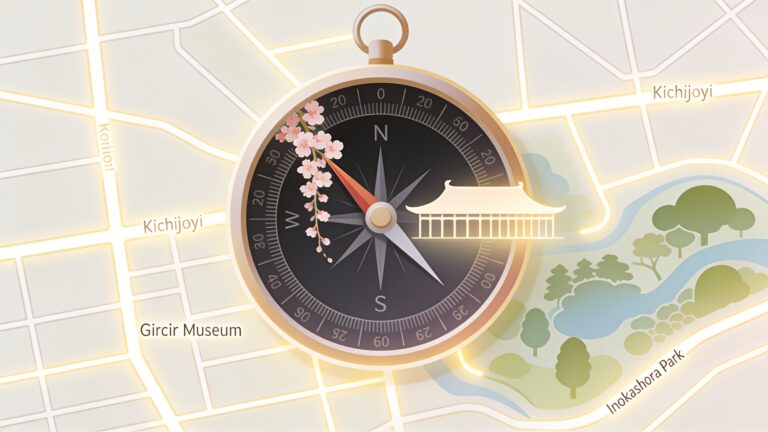
The station itself has north and south exits, each with a distinct personality. The north side has Sun Road, the covered shopping arcade, and the dense cluster of bars and restaurants that fill Harmonica Yokocho. The south side opens toward Inokashira Park, quieter streets, and a more residential atmosphere. Most neighborhoods force you to choose one character. Kichijoji gives you both.
Inokashira Park Is the Anchor
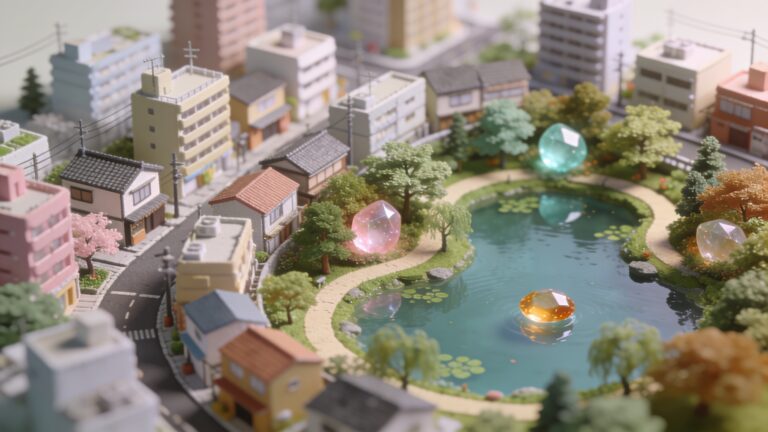
I would argue that Inokashira Park is the single biggest factor in Kichijoji’s livability. It covers roughly 38 hectares and includes a large central pond, wooded walking paths, a zoo, a Ghibli Museum (reservation-only, but worth the effort), and open lawns that fill with musicians and picnickers on weekends.
Having a park that size attached to a commercial neighborhood changes daily life in a tangible way. You can decompress on a weekday evening in 10 minutes flat. Families have space. Runners have a proper route. In cherry blossom season, the path around the pond becomes one of the most beautiful stretches in all of Tokyo, and I say that having walked Shinjuku Gyoen and Ueno Park plenty of times.
Shopping and Food: Variety at Every Budget
Kichijoji has figured out something that many Tokyo neighborhoods struggle with: range. It caters to students on tight budgets and to people with money to spend, and it does both well.
The covered arcades (Sun Road and Daiya Street) have chain stores, 100-yen shops, and affordable lunch spots. One block away, you’ll find independent boutiques, vinyl record stores, specialty coffee roasters, and restaurants serious enough to hold their own in any city. Harmonica Yokocho, a cluster of tiny bars and restaurants jammed into a narrow alley near the north exit, is one of my favorite places in Tokyo to eat. The stalls are small, the food is good, and the atmosphere is the kind you plan to stay in for one drink and leave three hours later.
| Category | What You’ll Find | Price Range |
|---|---|---|
| Daily groceries | Tokyu, Ito Yokado, local markets | Budget to mid-range |
| Cafes and coffee | Specialty roasters, kissaten-style cafes | Mid-range |
| Dining | Harmonica Yokocho stalls, ramen, izakayas, French bistros | Budget to high |
| Shopping | Vintage clothing, bookstores, record shops, fashion boutiques | Wide range |
| Entertainment | Live music venues, jazz bars, cinema | Mid-range |
The Residential Case
Living in Kichijoji costs more than living in Nerima or Adachi, but the premium is justified by what you get in return. Rent for a one-room apartment runs roughly 70,000 to 90,000 yen per month within a 10-minute walk of the station, with larger places scaling up from there. By central Tokyo standards, that is a reasonable figure for what you’re getting.
The neighborhood has good schools, local clinics, multiple supermarkets, and the kind of infrastructure that makes daily errands efficient rather than exhausting. Musashino City consistently scores well on municipal services, and the streets are clean and well-maintained.
Key reasons residents stay long-term:
- Walkability is high, and daily errands rarely require a train
- The residential streets behind the commercial core are quiet and tree-lined
- Community events and street markets run throughout the year
- The mix of ages means the area stays active without skewing too young or too quiet
- Access to nature through Inokashira Park and the nearby Tamagawa riverside
Culture Without the Crowds of Central Tokyo
Kichijoji has a creative identity that developed over decades, built around jazz, independent arts, and a tradition of small live music venues. That culture still exists. You can hear live jazz on a Wednesday night at a small bar near the station, find a Mingus record you’ve been hunting for in a basement shop, or catch a short film at the Kichijoji Baus Theater.
This is distinct from the cultural experiences you get in Shibuya or Shimokitazawa. The scale is more intimate. You’re at a venue with 40 seats, not 400. That compression creates a different relationship between audience and performer, and between you and the neighborhood itself.
The Honest Trade-offs
Kichijoji is popular, and popularity has consequences. Weekends bring crowds, particularly around the park and the main shopping streets. The station area on a Saturday afternoon can feel like a small version of Shinjuku. If you want total quiet and low foot traffic, this place will test your patience on certain days.
Rents have increased steadily as the neighborhood’s reputation has grown. Some of the more interesting independent shops have closed over the years as commercial rents tightened. That is a real loss, and it’s worth acknowledging.
Still, the core proposition holds. Kichijoji offers a quality of daily life that is hard to match in a city this large.

Key Takeaways
Kichijoji earns its top ranking because it solves the fundamental problem of urban living: it gives you access without overwhelming you. You get a major park, a walkable commercial district, strong transit connections, a food and culture scene with genuine depth, and a residential environment that functions well day to day. That combination, sustained at this level of quality, is what livability actually means.
If you’re planning a visit, arrive on a weekday morning and walk from the station to Inokashira Park. That walk, on a clear morning, will tell you everything you need to know. If you’re considering a move, spend a few weekday evenings in the neighborhood before committing. You’ll likely find yourself extending those evenings longer than planned.