
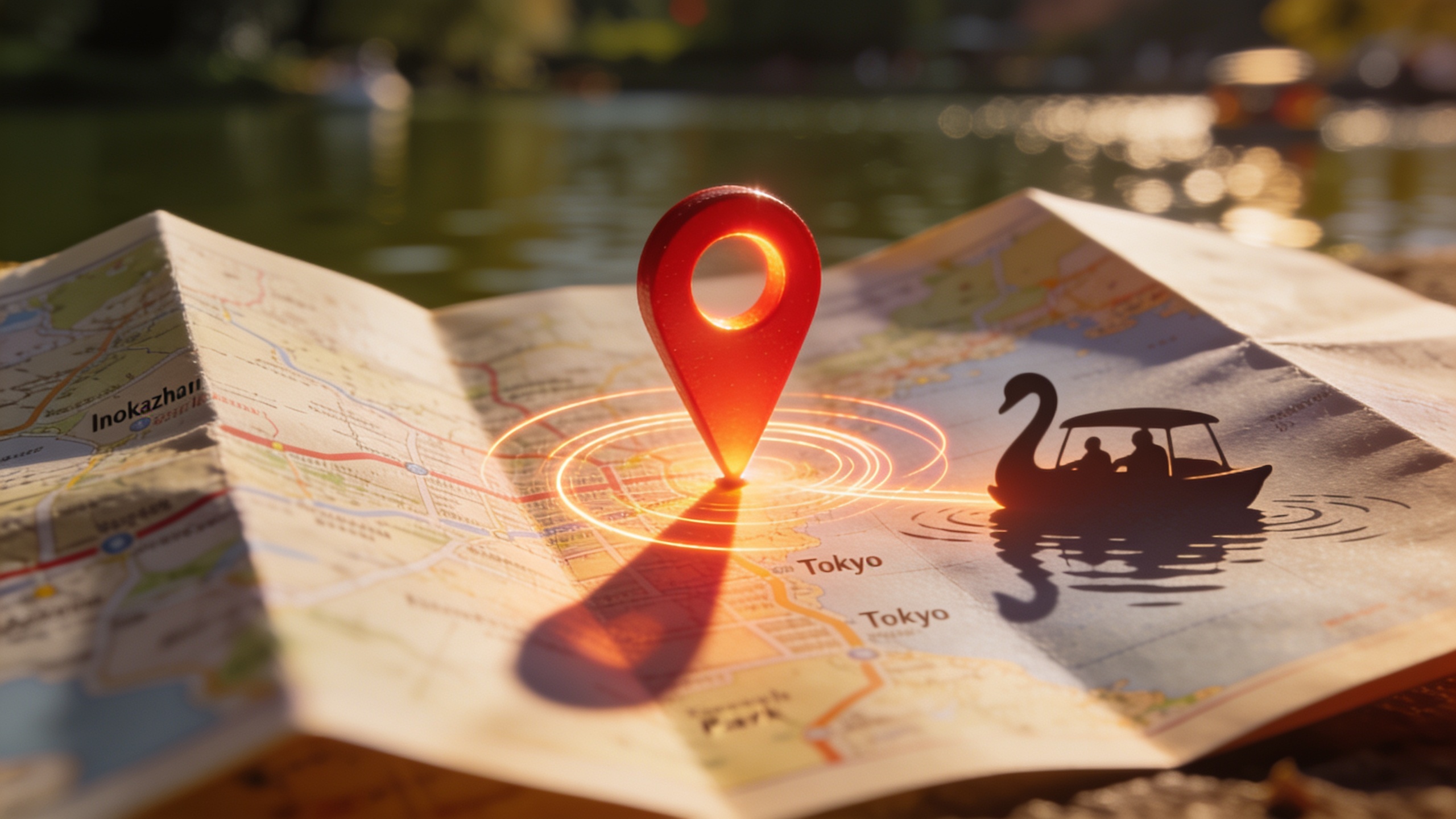
Which City Is Kichijoji In? The Answer Is More Complicated Than You’d Expect
Kichijoji is one of the most beloved neighborhoods in the entire Tokyo metropolitan area. People move here for the lifestyle, visit for the markets and parks, and consistently vote it Japan’s most desirable place to live. Yet the moment you ask which city it belongs to, things get genuinely interesting.
The short answer: Kichijoji is in Musashino City, in Tokyo Metropolis. But that single sentence skips over a layer of administrative geography that trips up first-time visitors and even some long-term residents. Let me break it down properly
Tokyo Is a Metropolis, Not a City
Most people arrive in Japan thinking of Tokyo as a city the way New York or London is a city. It works differently here. Tokyo is technically a “to,” meaning a metropolis, and it functions more like a prefecture than a single municipality. Under the Tokyo Metropolitan Government, there are 23 Special Wards (the dense urban core you probably picture when you think “Tokyo”), 26 cities, five towns, and eight villages.
Kichijoji sits in one of those 26 cities: Musashino City. It lies west of the Special Wards, in the Tama area of Tokyo Metropolis. So when someone says they live “in Tokyo,” they are technically correct, because Musashino City is part of Tokyo Metropolis. When someone says they live “in Musashino,” they are being more precise.
Musashino City: Compact and Well-Organized
Musashino City has a population of around 150,000 people across an area of just 10.73 square kilometers, making it one of the most densely populated cities in Japan outside the Special Wards. For context, that is smaller than many individual neighborhoods in other global cities.
Despite its small footprint, Musashino City contains three main districts.
- Kichijoji, the commercial and cultural hub, anchored by its busy station
- Mitaka, the quieter residential district adjacent to the city of Mitaka
- Musashino, the administrative heart of the city, home to City Hall
Kichijoji is the face of Musashino. It has the shopping, the bars, the dining scene, Inokashira Park, and the JR and Keio rail connections that pull people in from across the metro area every single weekend.
How to Get to Kichijoji
Understanding which city Kichijoji is in also helps with navigation. The two main rail lines that serve Kichijoji Station are the JR Chuo Line and the Keio Inokashira Line.
| Rail Line | Direction toward Central Tokyo | Journey Time to Shinjuku |
|---|---|---|
| JR Chuo Line (Rapid) | East toward Shinjuku, Ochanomizu, Tokyo Station | Approx. 15 minutes |
| Keio Inokashira Line | East toward Shimokitazawa, Shibuya | Approx. 26 minutes |
The Chuo Line rapid service makes Kichijoji extraordinarily accessible. You are under 20 minutes from Shinjuku and under 30 minutes from Tokyo Station. That commute time, combined with Musashino City’s lower land costs compared to the Special Wards, is a big reason the area ranks so highly in livability surveys year after year.
Why People Confuse Kichijoji’s Location
The confusion around Kichijoji’s city has a few sources. First, because Musashino City is administratively part of Tokyo Metropolis, the distinction between “Tokyo city” and “Musashino City” blurs for most outsiders. Second, train maps label destinations by neighborhood name, so you look for “Kichijoji” on the board and never see “Musashino.” Third, the city of Mitaka borders Musashino directly to the west, and Inokashira Park, one of Kichijoji’s defining landmarks, actually straddles the boundary between the two cities.
That last point catches people off guard. You can walk into the park from the Kichijoji side, stroll past the rowing boats on the lake, and exit on the Mitaka side without crossing any visible boundary. The park belongs to both cities, even though its main entrance sits firmly in Musashino.
The Official Address Format
If you ever need to write out a formal Japanese address for anything in Kichijoji, here is how the hierarchy works from largest to smallest.
- Tokyo Metropolis (東京都, Tokyo-to)
- Musashino City (武蔵野市, Musashino-shi)
- District within Musashino: Kichijoji (吉祥寺)
- Then the specific chome (block number) and ban/go (building number)
So the full administrative chain is Tokyo Metropolis, then Musashino City, then the Kichijoji district within that city. Anyone sending mail to Kichijoji writes “Tokyo-to Musashino-shi” at the top of the address block. The neighborhood name comes after the city, not the other way around.
Does It Matter Day to Day?
For visiting Kichijoji, the city boundary matters very little. You ride the train to Kichijoji Station, walk out, and the neighborhood does its thing: Harmonica Yokocho for drinks, the shotengai covered shopping arcade, Inokashira Park for a picnic, Sun Road for an afternoon browse. The experience is entirely self-contained.
For anyone planning to live here, the distinction matters more. Musashino City runs its own municipal services, school enrollment zones, local tax registration, and residency procedures. You register at Musashino City Hall, not at any Tokyo ward office. Services, garbage collection schedules, and local civic notices all come from Musashino.
For researchers and travel writers, getting the geography right matters a lot. Kichijoji is in Musashino City, which is in Tokyo Metropolis. Calling it a “Tokyo ward” is inaccurate. Calling it simply “Tokyo” is technically fine but imprecise.
Key Takeaways
Kichijoji is a neighborhood within Musashino City, one of 26 cities inside Tokyo Metropolis. It sits in the Tama area, west of the 23 Special Wards. The area is served by the JR Chuo Line and the Keio Inokashira Line, both connecting to central Tokyo in under 30 minutes. Inokashira Park, arguably Kichijoji’s most famous landmark, crosses the municipal boundary into the neighboring city of Mitaka. When writing a formal Japanese address, the correct order is Tokyo Metropolis, Musashino City, then the Kichijoji district name.
If you are planning a visit, exploring the area, or considering a move here, dig deeper into the site. There is a lot more to Musashino City and Kichijoji than a single administrative answer can capture.